
CASE STUDIES

Situations like yours, and how they turned out.

Client names are kept confidential. The challenges and results are real.
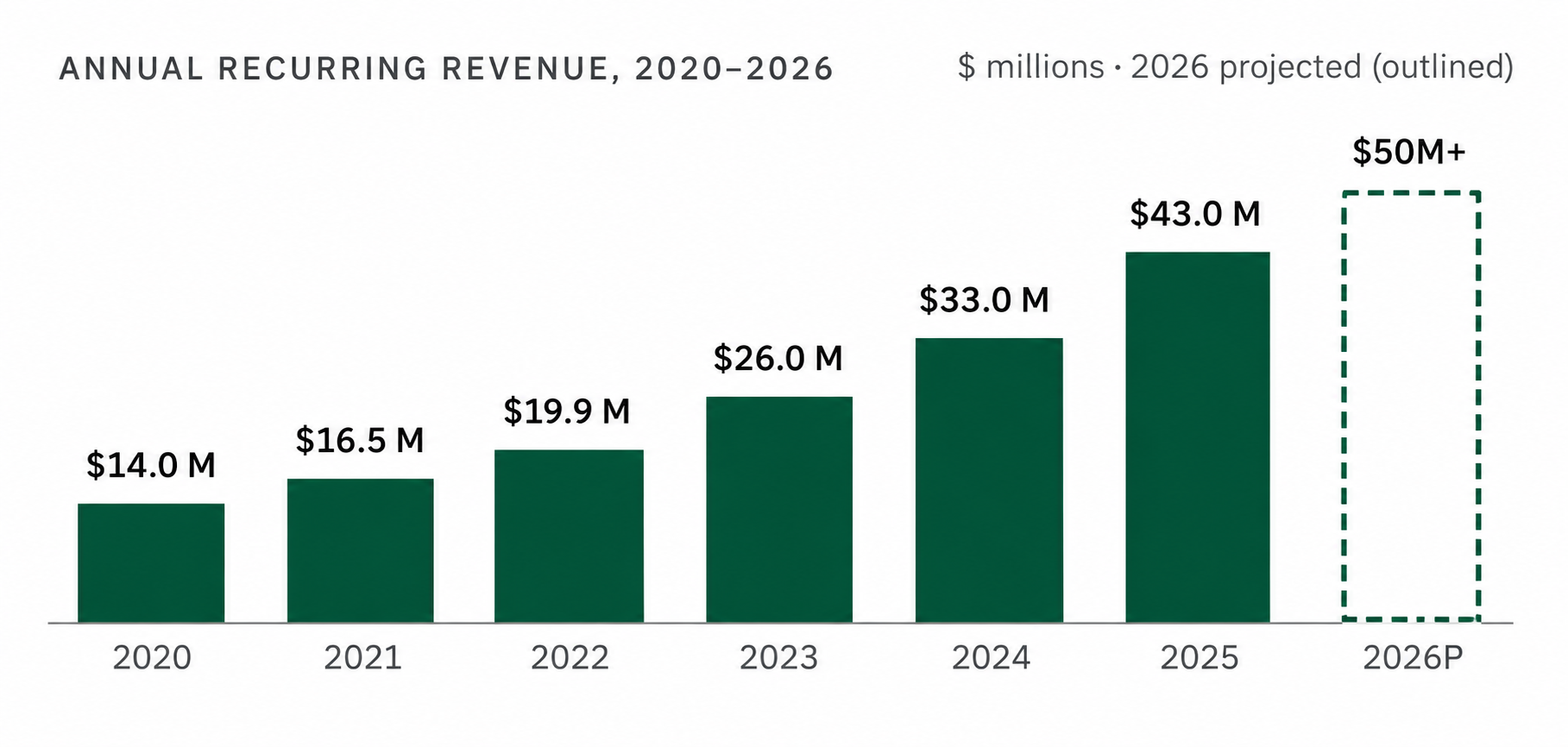
Annual recurring revenue chart
The challenge

After two decades of founder-led growth, the company was ready to scale, but its finance function wasn’t. There was no FP&A team, the books ran on QuickBooks Online, and the senior team had no shared weekly numbers tying their work to the CEO’s vision.

What I did

• Aligned leadership around the numbers. Partnered with the CEO, the company’s owner and founder, to put my recommendations into action, translating the company’s vision into weekly KPIs for the senior team and a short list of key initiatives.

• Built FP&A from scratch. Hired the key roles and delivered weekly and monthly KPI dashboards for each of the CEO’s direct reports, tracking the SaaS metrics that matter most: annual recurring revenue (ARR), gross and net revenue retention (GRR and NRR) and customer lifetime value (LTV).

• Put financial discipline in place. Introduced KPI-driven monthly reporting, an annual budget and a rolling three-year cash plan.

• Modernized the systems. Migrated from QuickBooks Online to NetSuite for enterprise scale, with AI-enabled board reporting.

• Kept the people driving the growth. As a board advisor to a $110M family-owned restaurant company, I had seen a phantom stock program succeed. I brought that example to the CEO, who gave me the green light, and with a specialist firm I had worked with before, I implemented a program awarding phantom stock each year to the 30 most impactful people in the company.

The result

With every leader working from the same numbers each week, ARR tripled from $14M in 2020 to $43M in 2025, and is projected to reach $50M in 2026. Customers stayed and spent more, with net revenue retention above 120% and an average customer lifetime of more than 8 years. Employee turnover stayed below 5%, helped in part by the phantom stock program, and the company gained a finance platform built to support the next stage.

The challenge

Profitability in a large multi-unit retail division of a public company needed to turn around. The finance and accounting team wasn’t set up to drive enterprise-wide change, and leadership needed a clear, shared plan for growing the business.

What I did

• Rebuilt the finance and accounting team. Reshaped a team of 36 around high-caliber talent, including expertise from outside the industry, while cutting team costs by $100K a year.

• Set the roadmap with the executive team. Led leadership in building a plan for sustainable brand execution, focused on increasing customer visits and selling across departments.

• Made productivity visible every week. Implemented a weekly labor productivity dashboard across 500 retail locations so store and division leaders could act on the numbers quickly.

• Strengthened controls. Partnered with internal and external auditors to certify SOX compliance, and moved the division to #1 in vendor funds compliance.

The result

I helped the division add $25M in EBITDA year over year, delivered by a leaner, stronger finance team and with controls that met public-company standards.

The challenge

Heavy seasonality left this restaurant company facing a cash crunch, with a projected $1M shortfall in the next 30 days. Bills were coming due, invoices were missing, and there was no clear view of what cash was needed when. As a longtime board advisor with deep relationships across the family, I was asked by the CEO to step in as interim CFO.

What I did

• Hands-on from day one. In the first two days, I worked directly with operations, accounts payable and store operators to manage the bills coming due.

• Got the full picture. Each morning, the head of AP and I tracked down missing invoices so every cash need was visible.

• Built a weekly cash budget. I developed a daily cash flow model, reviewed every open invoice in it, and matched the weekly EDI payment cycle to the cash actually available.

• Set a working rhythm. By the end of the first week, twice-weekly stand-up meetings with the full AP team kept everyone on the same plan.

• Kept vendors’ trust. I called key vendors, made weekly payment commitments, and kept every one.

• Brought operations on board. Each week’s cash budget went to operations, so “nice to have” spending not tied to sales or safety slowed down.

The result

The $1M cash gap was averted within 30 days, with vendors paid as promised. The CEO trusted the approach enough to bring me back a second time.

“The Board trusts you to solve this complex matter.”

CEO, $110M family-owned restaurant company
The challenge

The family owners of a $300M specialty retailer, with 110 locations and an e-commerce platform, decided to sell. I already knew the business: a private equity firm had referred me to management years earlier, to help structure the company’s new e-commerce operation. Now the CEO asked me to return and lead the financial side of the sale: the numbers buyers would scrutinize and the story that would sell the business.

What I did

• Built the case for buyers. Worked with the investment bankers to build the multi-year financial history and forecast model, and the company’s entrepreneurial story for the confidential information memorandum (CIM).

• Tightened the monthly numbers. With the controller, turned the monthly financial analysis into a concise monthly financial package.

• Modeled the business store by store. Built a detailed financial model with a P&L for every store, tracking sales, traffic, average ticket and EBITDA, plus e-commerce sales and orders by channel, new versus returning customers and cost per new customer. A live balance sheet, borrowing base and fixed charge coverage ratios showed how much bank debt the business could support under different deal structures.

• In the room with buyers. Joined the CEO and investment bankers in every investor presentation, answering the financial questions.

• Led the quality of earnings review. Served as the company’s liaison with the outside audit firm preparing the quality of earnings report, addressing process issues and highlighting what worked.

• Kept the deal alive through COVID. When every US store was forced to close, the owners paused the sale. After COVID, the work we had already done carried the process through to a successful close.

The result

The company, with $23M in annual EBITDA, sold at its asking price, despite a pandemic that closed every store mid-process. It is now the platform company for much larger acquisitions.

The challenge

Soon after a private equity firm acquired this Midwest assisted living company, its cash dropped rapidly and it fell into violation of its bank covenants. The PE owners, whom I had worked with before, asked me to step in as interim CFO. For the next six months, I was at the Midwest headquarters every week.

What I did

• Fixed what operations needed. Within the first week it was clear the new HRIS system had been implemented without input from operations. I brought in the software vendor and ran discovery sessions with operators to capture the missed requirements, then reimplemented it.

• Took control of cash. Built a 13-week cash flow model and held recurring Friday calls with the bank’s workout director.

• Brought labor costs under control. With operations and a PE analyst, created a weekly labor productivity and overtime scorecard, reviewed every Friday with each district manager to cut labor costs and share best practices.

• Strengthened the team. Created an FP&A function and restructured the IT team.

• Mapped the road ahead. With the financial analyst, built a metric-driven three-year business plan, including acquisitions once the business was stable, and shared it with the PE firm and CEO.

• Returned to growth. As operations stabilized, completed two small acquisitions adding five locations.

The result

Within six months, the bank reset the covenants, and the high-interest second loan was restructured into a new first loan. With cash under control and operations stable, the company returned to growth, adding five locations through acquisition and growing from 55 to 60.


The challenge

A PE-owned manufacturer with three US plants was running out of cash, and bankruptcy was a real possibility. The managing director of the PE firm asked me to take over as full-time CFO.

What I did

• Took daily control of cash. Recruited a long-time associate to help build a daily cash flow model, set cash budgets for each plant, and used the forecast to decide which urgent purchases to make and to protect payroll.

• Learned the plants from the floor up. Partnered with the operators to understand the complexity and true cost of manufacturing complex components at each location.

• Found where the money was going. Analyzed the competitive landscape and competitors’ products, and split fixed and variable costs by plant. The numbers showed no viable path back to profitability for the California plant.

• Consolidated operations. Worked across the leadership team to develop the logistics and costs of consolidating the plants. The PE owners approved the plan to migrate all California operations into the Alabama plant, and the California plant was closed.

• Treated people fairly. Designed and implemented a severance program for the more than 60 employees in California.

• Found the right new owner. A long-time board member knew the company better than anyone. Over many conversations, I showed him a viable financial plan, without the California plant, that showed a clear path back to profitability.

The result

The company avoided bankruptcy and emerged with two plants instead of three. On the strength of the plan, the board member invested $5M in the new entity to fund operations and took a majority stake, while the PE firm stayed on as a minority owner. The improved financial and operating results put the company back on the path to becoming a scalable platform company.

The challenge

A private equity firm was acquiring a $600M multi-unit retailer from its second-generation family owners. A national search firm recruited me as interim CFO to complete the acquisition and lead the company’s shift to the pace and discipline of PE ownership.

What I did

• Closed the deal cleanly. In the 30 days before closing, worked with the PE team and outside auditors to confirm the working capital calculation and a GAAP-compliant opening balance sheet.

• Started reshaping the portfolio. Identified the locations losing EBITDA and began closing them.

• Built PE-grade reporting. With senior operators, put in place a metric-based budget by location and department, reorganized the IT team, and replaced the old reporting with daily flash reports for the PE owners.

• Made category managers own their numbers. Started monthly P&L reviews where every category manager reported wins and losses and adjusted their weekly financial and merchandising plans, building shared know-how on discounting, merchandising and labor scheduling.

• Handed off on purpose. After seven months, onboarded and trained a local, full-time CFO to carry the plan forward.

• Came back when called. Two years later, when that CFO departed, the PE firm’s managing director asked me to return as CFO and co-CEO.

The result

The portfolio realignment worked. Revenue was cut in half, to $300M, as unprofitable locations closed, while annual EBITDA grew from under $6M to almost $25M.

“Blake has a natural ability to partner with ownership and help drive strategy, while at the same time working on the ground to (re)build the finance and accounting teams, leverage IT and work collaboratively with the senior team to drive results.”

PE Manager
The challenge

Two Southern California specialty retail chains, one carved out of a public company and one entrepreneur-led, were being combined. Within two weeks it was clear the second lacked basic cash and business controls: payables were far behind, invoices were missing, franchise documents were two years out of date, and some franchisees had stopped paying royalties.

What I did

• Put basic controls in place. Merged two general ledgers into one, brought in a boutique accounting firm I trusted to reconcile payables, and had the franchise disclosure documents brought up to date.

• Ran the numbers location by location. Unit economics showed the bottom 20% of locations, including some franchised ones, had no real path to profitability.

• Shrank to profitability. Gave the board a plan to exit three to four unprofitable franchisees and close a similar number of company-operated locations.

• Reshaped the business for the long run. Recommended selling most company locations to successful franchisees, an approach I had seen work at a large national restaurant chain, and cut overhead, including replacing my own role with a controller, the right fit for a franchisor.

The result

The company avoided a filing and returned to cash breakeven with a smaller, healthier footprint and a leaner franchisor model, and the shift toward franchising was underway. Five years later, the company was sold.

Let’s look at the road ahead together.

Facing one of these situations? A 30-minute conversation is usually enough to tell whether I can help. Everything you share stays confidential.

  1. 01

    Book a call

  2. 02

    A Confidential 30-minute conversation where we begin to shape the scope together.

  3. 03

    If it's a fit, an engagement letter will follow.

Book a Call

blake@barnettcfo.com · (949) 683-8584 · Connect on LinkedIn